

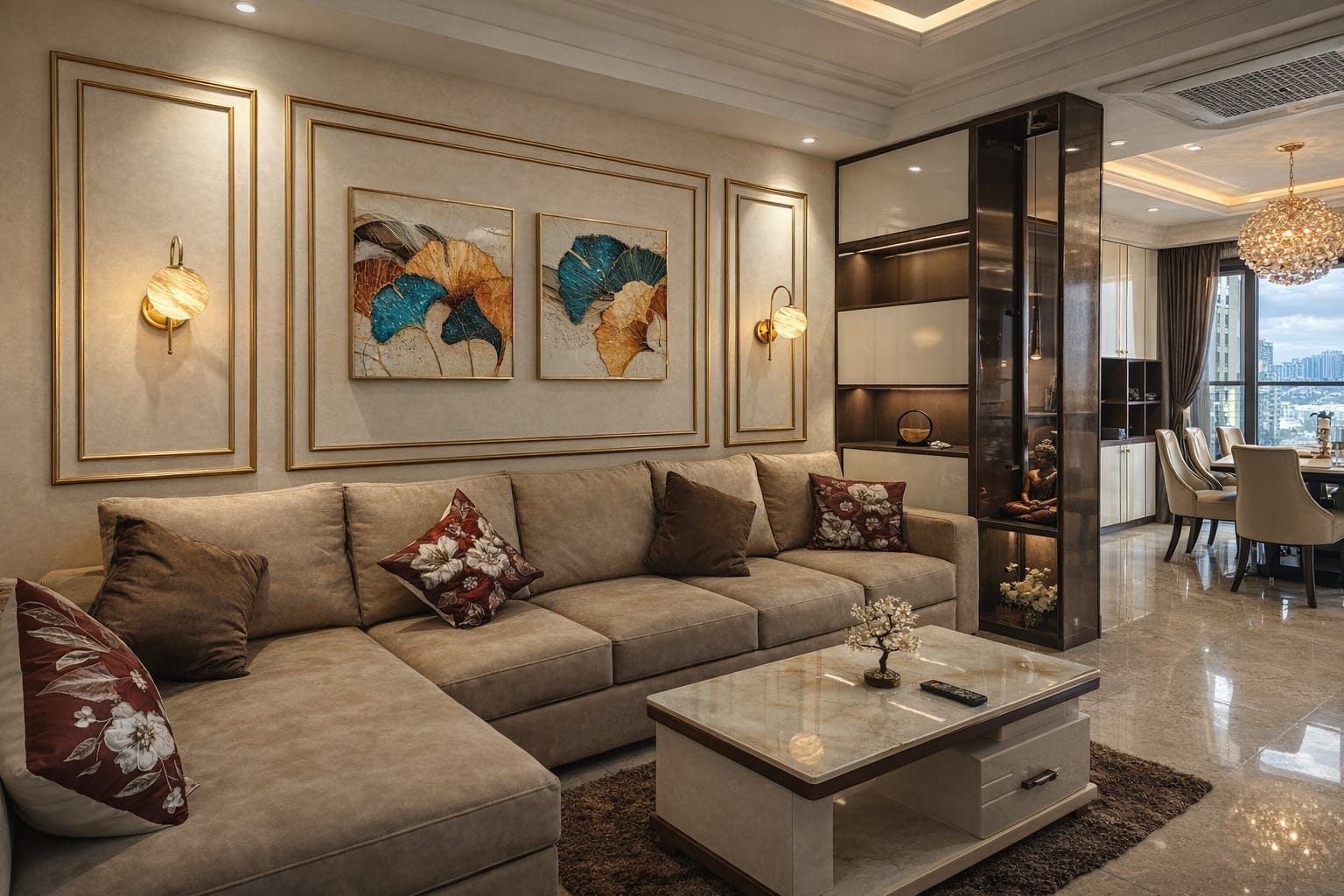
Choosing an interior designer is not just about making a space look good. The right designer can save you money, prevent costly mistakes, and ensure smooth execution. The wrong one can delay your project, increase expenses, and leave you with poor finishing that’s expensive to fix later.
Before finalizing a designer, consider these important factors.
1. Look at Completed Work, Not Just 3D Designs
Many designers present impressive 3D images, but execution is what matters.
Ask to see:
Photos of completed sites
Close-up finishing details
Before-and-after comparisons
A designer who has real execution experience will confidently show finished work.

2. Check Experience in Similar Projects
Not all designers are the same. Some focus on villas, others on apartments or commercial interiors.
Ask:
How many projects similar to mine have you completed?
What was the budget range?
What challenges did you face?
Specific answers show real experience. Vague answers usually mean limited exposure.

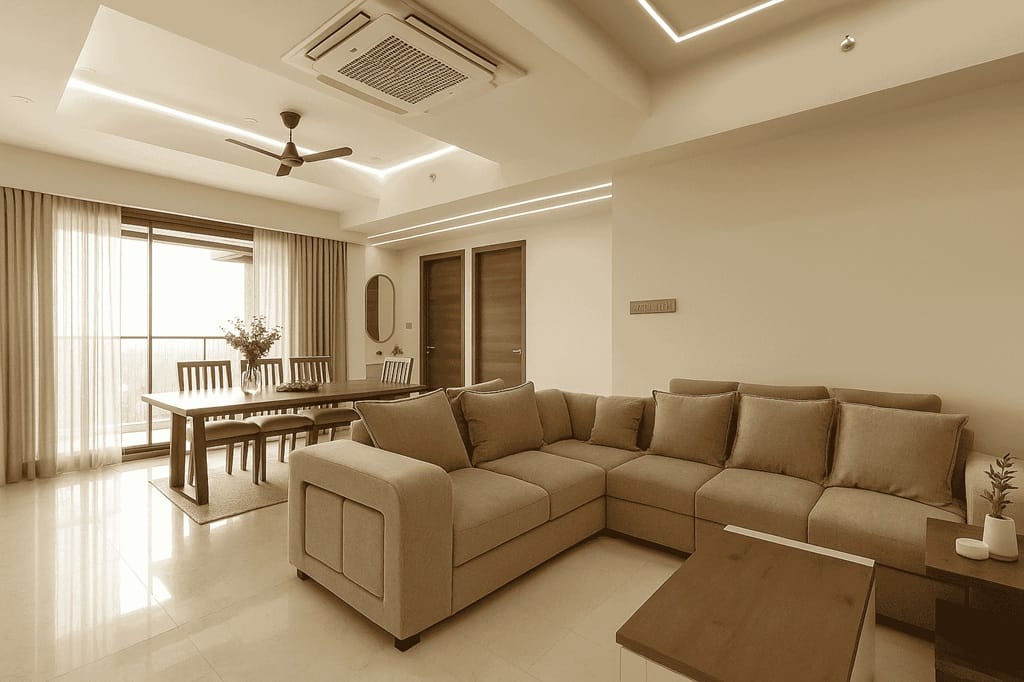
3. Understand Who Handles Execution
One common mistake people make is assuming the designer will manage everything.
Clarify:
Who supervises the site daily?
Who coordinates carpenters, electricians, and painters?
How often does the designer visit the site?
Design without supervision often leads to poor finishing and delays.


4. Transparency in Pricing
Low quotes often look attractive, but they can lead to problems later.
A reliable designer will:
Clearly explain what is included
Specify materials and finishes
Mention possible extra costs in advance
Hidden costs usually come from unclear quotations.
5. Communication Matters More Than Style
A designer may be creative but difficult to communicate with. That creates stress during execution.
Observe:
Do they listen carefully?
Do they explain options clearly?
Do they respond on time?
A project succeeds when communication is smooth.
6. Timeline Commitment
Delays are one of the biggest frustrations in interior work.
Ask:
What is the realistic completion time?
What causes delays?
How are delays handled?
A professional designer gives realistic timelines, not promises just to win the project.
7. After-Service and Support
Small adjustments and minor issues are normal after completion.
Ask:
Do you handle snag works?
How quickly are issues resolved?
A designer who disappears after payment is a serious risk.

Final Thoughts
A good interior designer is not just someone who creates beautiful designs. A good designer plans carefully, executes properly, communicates clearly, and stands behind their work.
Choosing wisely at the beginning saves money, time, and stress later.